
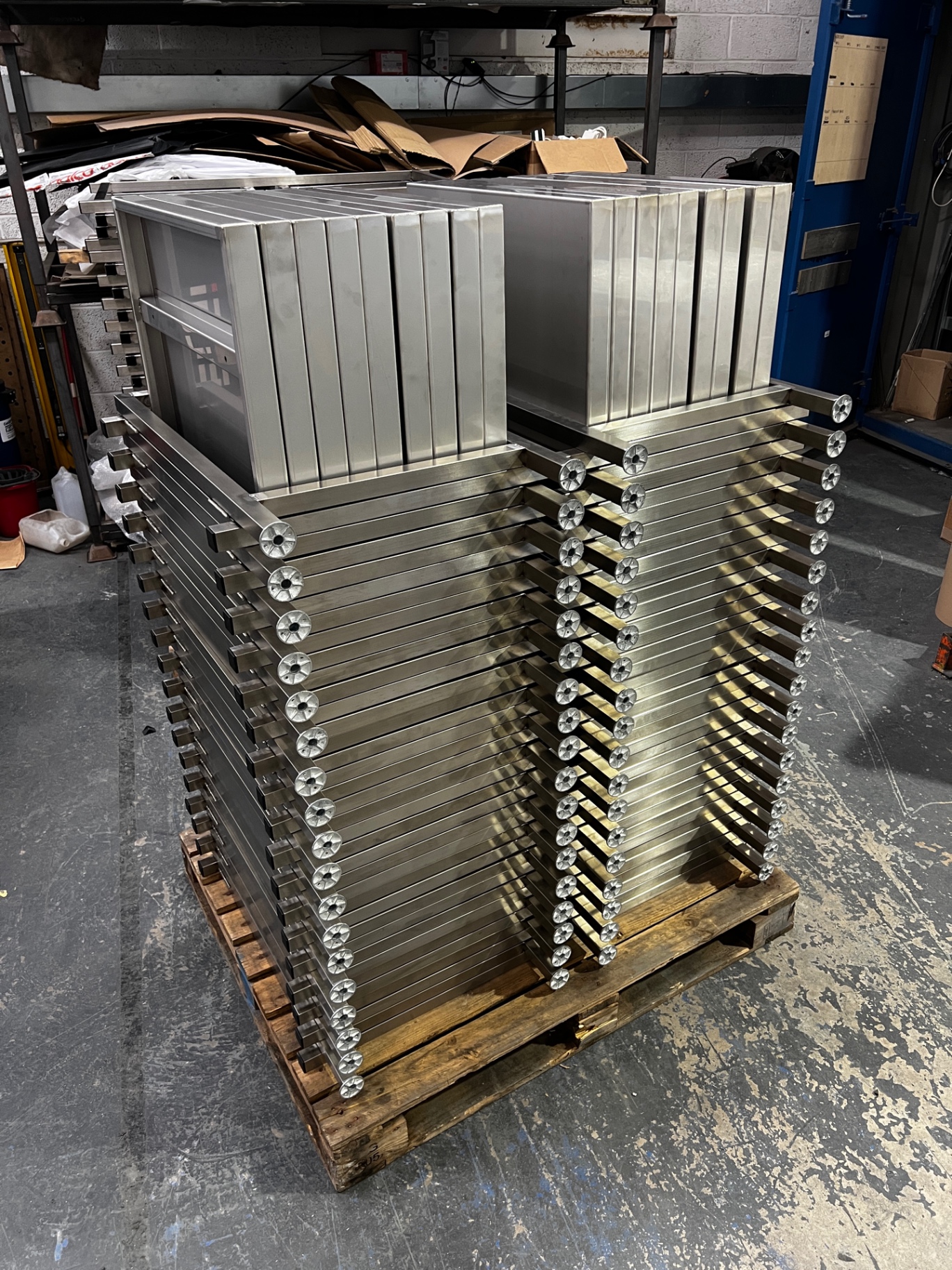
Bespoke stainless steel work tables - a UK buyer's guide
Standard catalogue tables rarely fit real kitchens. This guide covers how bespoke stainless steel work tables are specified and built - material grade, sizing, load ratings, edges, and undershelves - so you can brief a UK fabricator with confidence.
Why bespoke
Off-the-shelf work tables assume a generic layout. In a real commercial kitchen, walls run out of square, service windows sit at awkward heights, and equipment underneath dictates leg positions. A bespoke stainless steel table is measured to the space, matched to the workflow, and finished to the hygiene standard the operation actually needs.
At Steel Frog, design and manufacture happen under one roof in the UK, which shortens the loop between an on-site measurement and a finished, delivered table.
Material grade: AISI 304 vs 316
Most commercial stainless steel work tables are fabricated from AISI 304 (also written 1.4301 or 18/8). It resists corrosion from typical food acids, cleans easily, and welds cleanly. For chloride-heavy or coastal environments — fish preparation, brine, saltwater proximity — AISI 316 (1.4401) adds molybdenum for stronger pitting resistance.
- 304: the default for kitchens, bakeries, cafés and general food service.
- 316: upgraded corrosion resistance for fish preparation, seafood kitchens and coastal locations.
- Gauge: 1.2 mm to 1.5 mm tops are typical; heavier gauges suit high-load prep areas.
Sizing and layout
A bespoke work table is drawn to fit the run, not the catalogue. Common inputs we ask for:
- Length and depth: measured to the millimetre, with allowance for services and skirting.
- Working height: 800–950 mm is standard; adjustable to the primary use.
- Upstand: 50–150 mm rear or side upstands prevent splash behind the run.
- Cut-outs: sinks, waste chutes, hobs and pass-through slots designed into the top from the start.
Load ratings and structure
A general prep table carries hand-tools and ingredients. A pass table carries loaded gastronorm pans. A butcher's block table carries repeated impact. The frame is engineered around the load:
- Frame: box-section legs (typically 30 × 30 mm) welded to reinforcing rails under the top.
- Reinforcement: using composite solid service materials.
- Feet: adjustable stainless bullet feet, or braked castors for mobile tables or trolleys.
- Undershelf: single or double, load-rated to suit your requirements.
Edges and finish
Edges control hygiene and safety. Options depend on the workflow:
- Turned-down edge: the standard commercial finish; folded 40–50 mm on all sides.
- Marine (raised) edge: contains spills for wet-prep and butchery areas.
- Radiused corners: internal radii ease cleaning and eliminate dirt traps.
- Surface finish: standard commercial kitchen finish starts with 2B, upgraded to satin, grained, mirror polish, ideal for front of house.
Have a table to specify?
Share drawings, sketches or dimensions and we'll come back with a fabrication proposal.
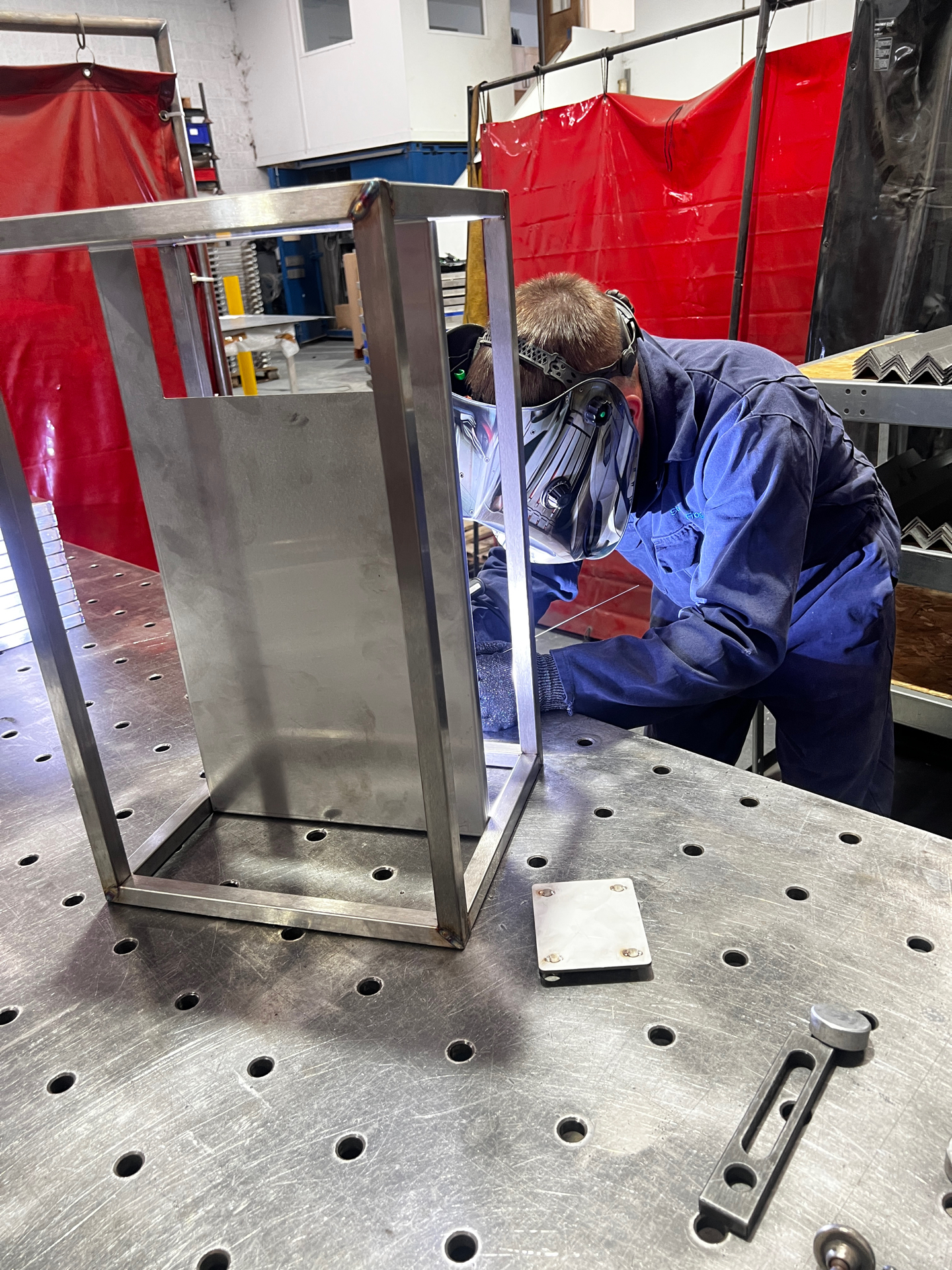
Bespoke stainless projects
See how the same fabrication approach applies to counters, cabinets, servery units and specialist laboratory work.
View projects →